Need assistance finding a project or have questions about a future project? Contact us for support.

Black Fox Ranch
Jackson, Wyoming
Service
Type
Location
- Jackson, Wyoming
Photography
- Matthew Millman
- Kevin Scott
- Video: Sheets Studios
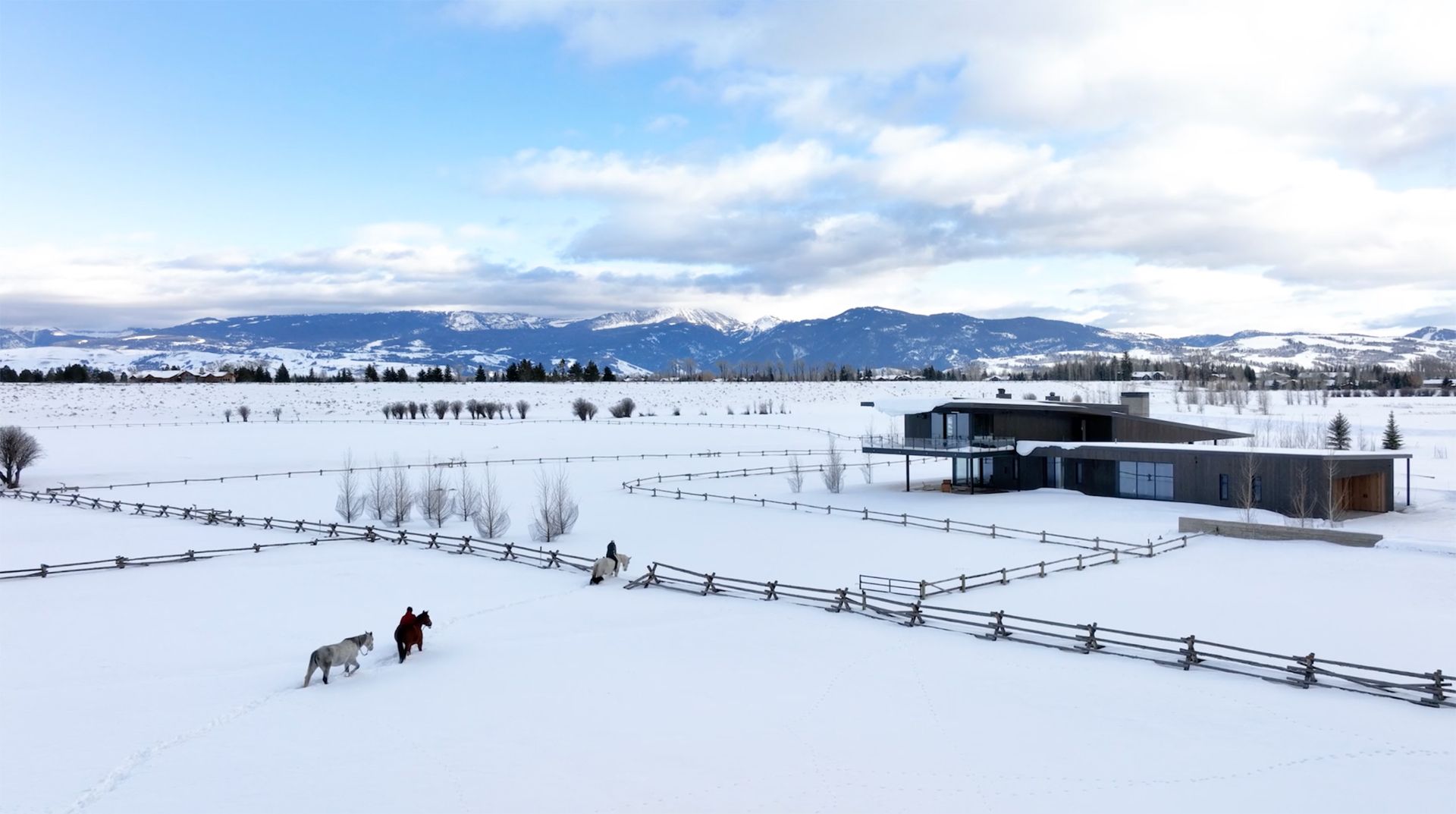
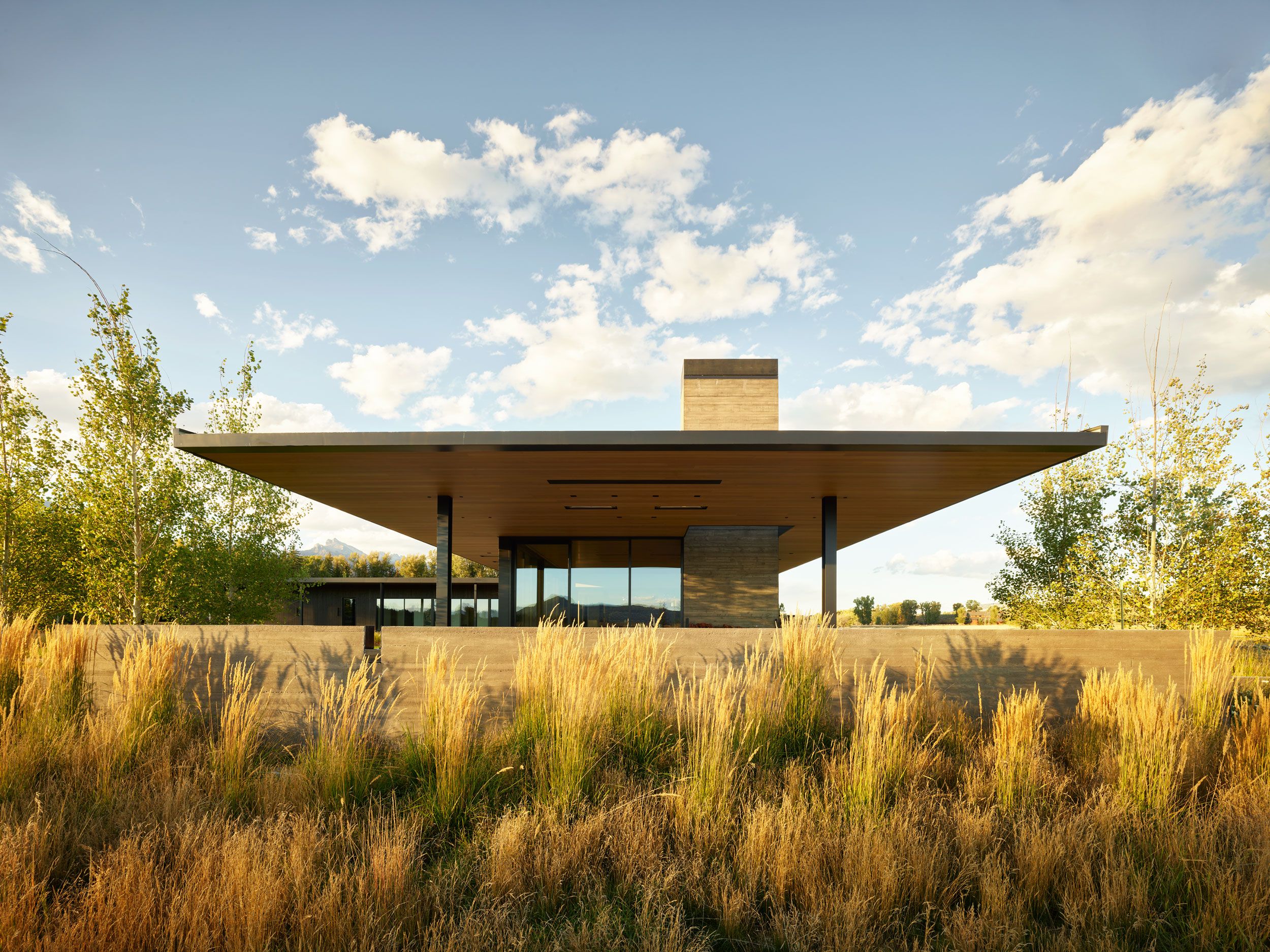
This 35-acre property holds a rich history, having formerly functioned as a working cattle ranch. For their new residence and barn, the owners wanted to return the land to its historic roots as a working ranch, creating a home situated next to a new barn, corral, and pastures that help them return to their equestrian roots.

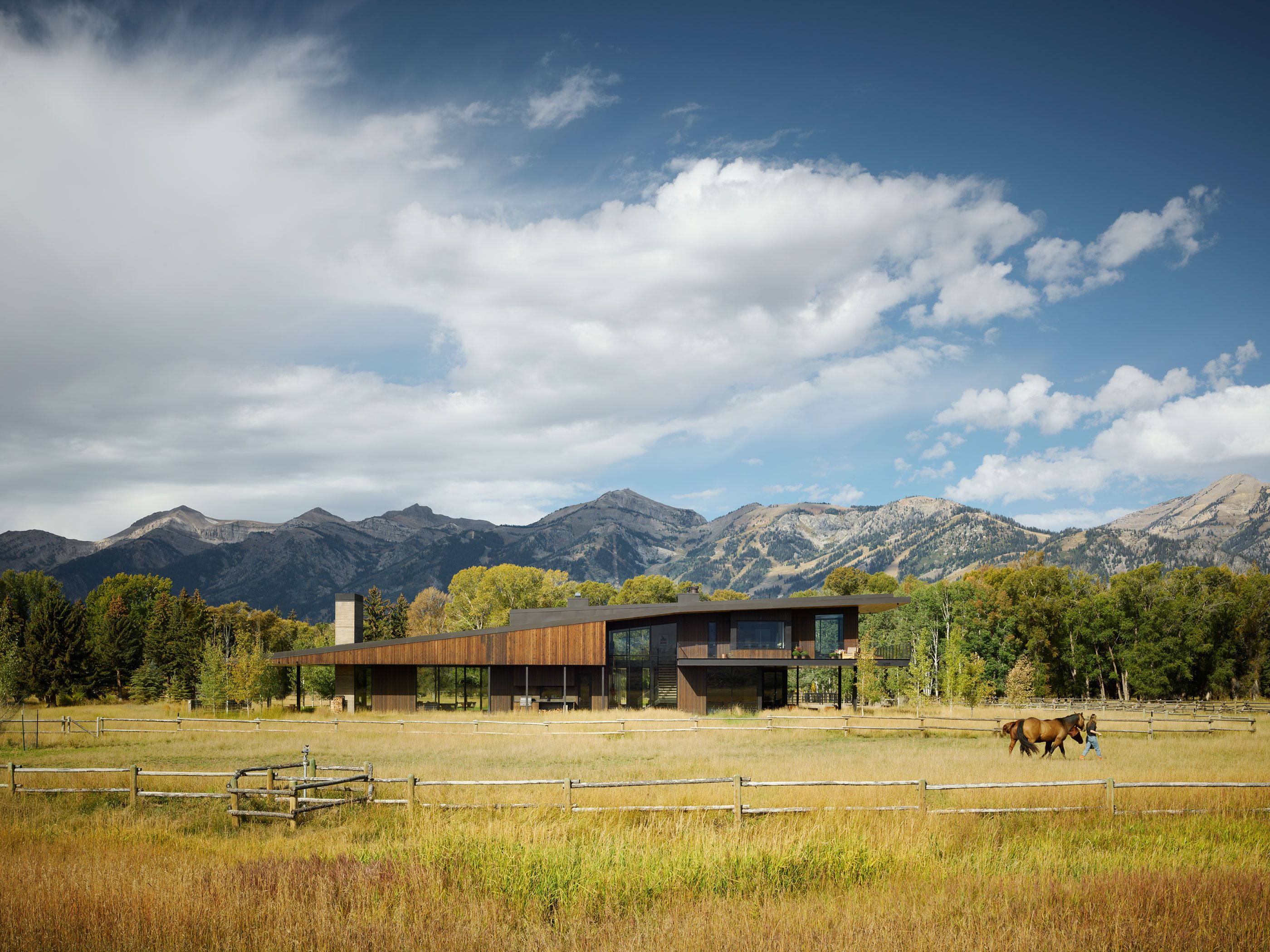
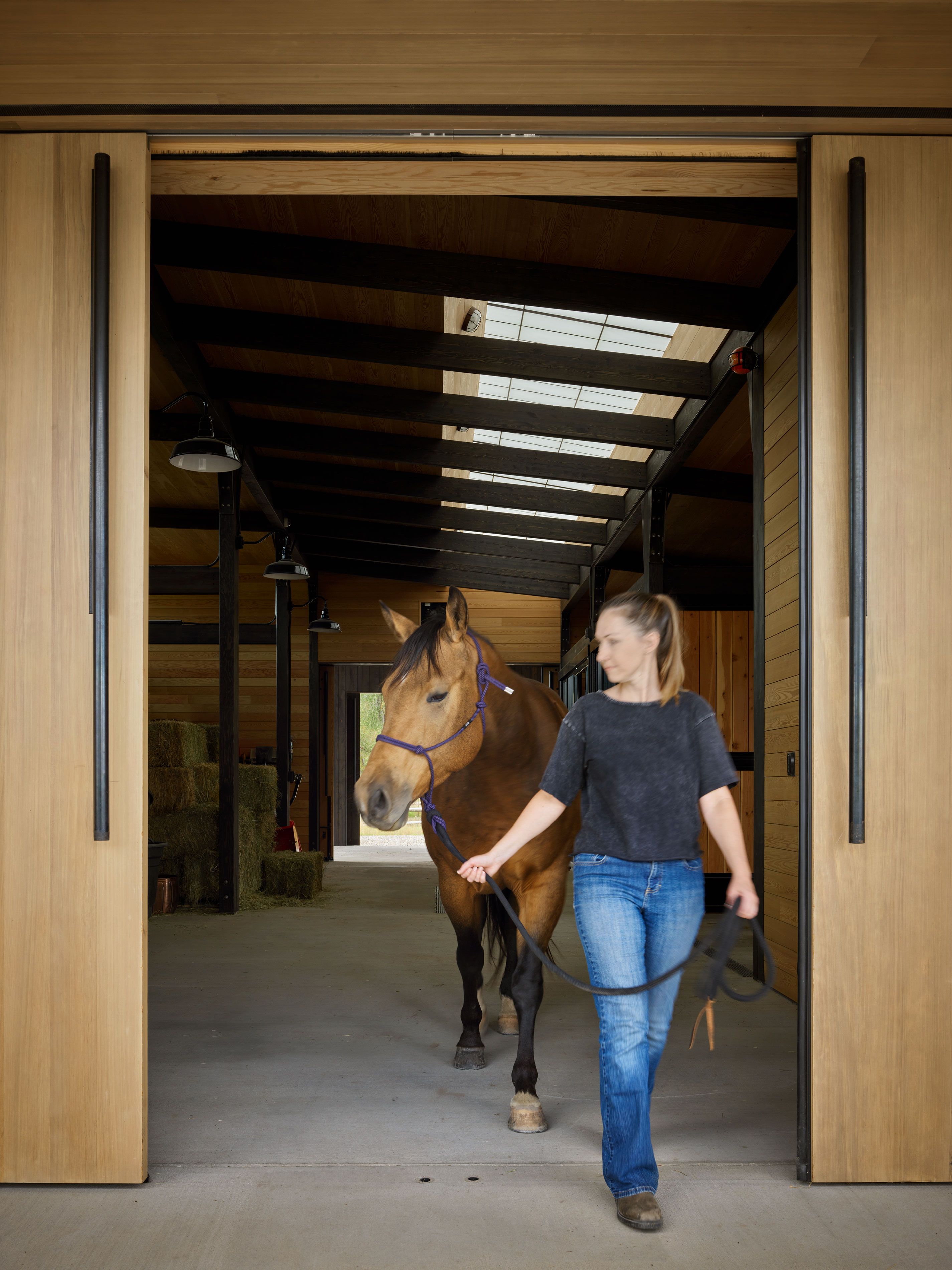
Sited next to a band of cottonwoods and aspens occupying a former riverbed of the Snake River, Black Fox Ranch consists of a couple’s primary residence and a barn with stables. The property formerly functioned as a working cattle ranch and has remnants of a 19th-century trapper’s cabin, corrals, and 100-year-old irrigation ditches. With an appreciation of wildlife and conservation, plus their longtime love of horses, the clients desired to return the land to its origins as a working ranch with livestock and hay production. The newly constructed main residence sits beside a contemporary barn containing stables, a corral, and pastures, ensuring the horses are a constant visual presence.
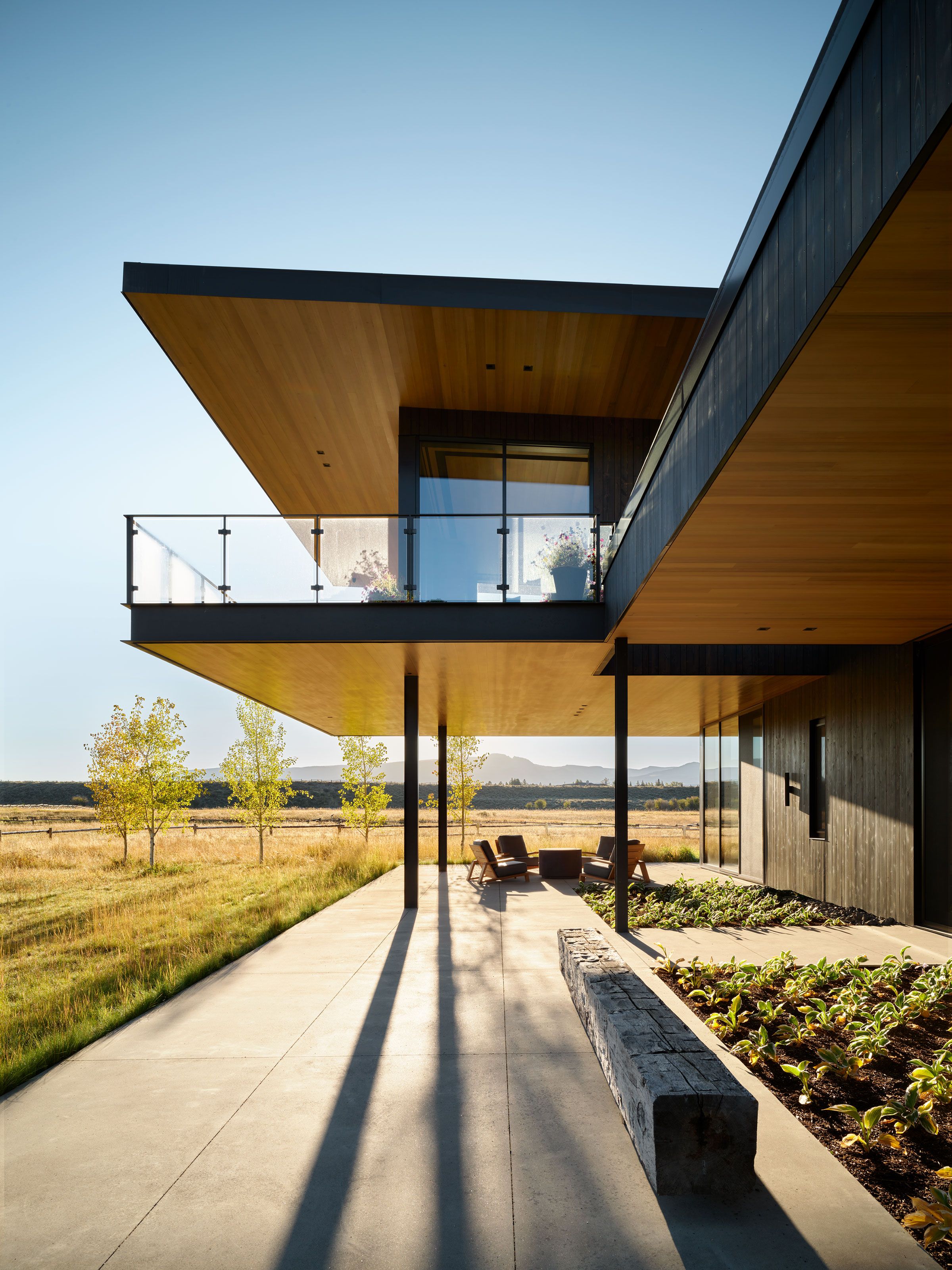
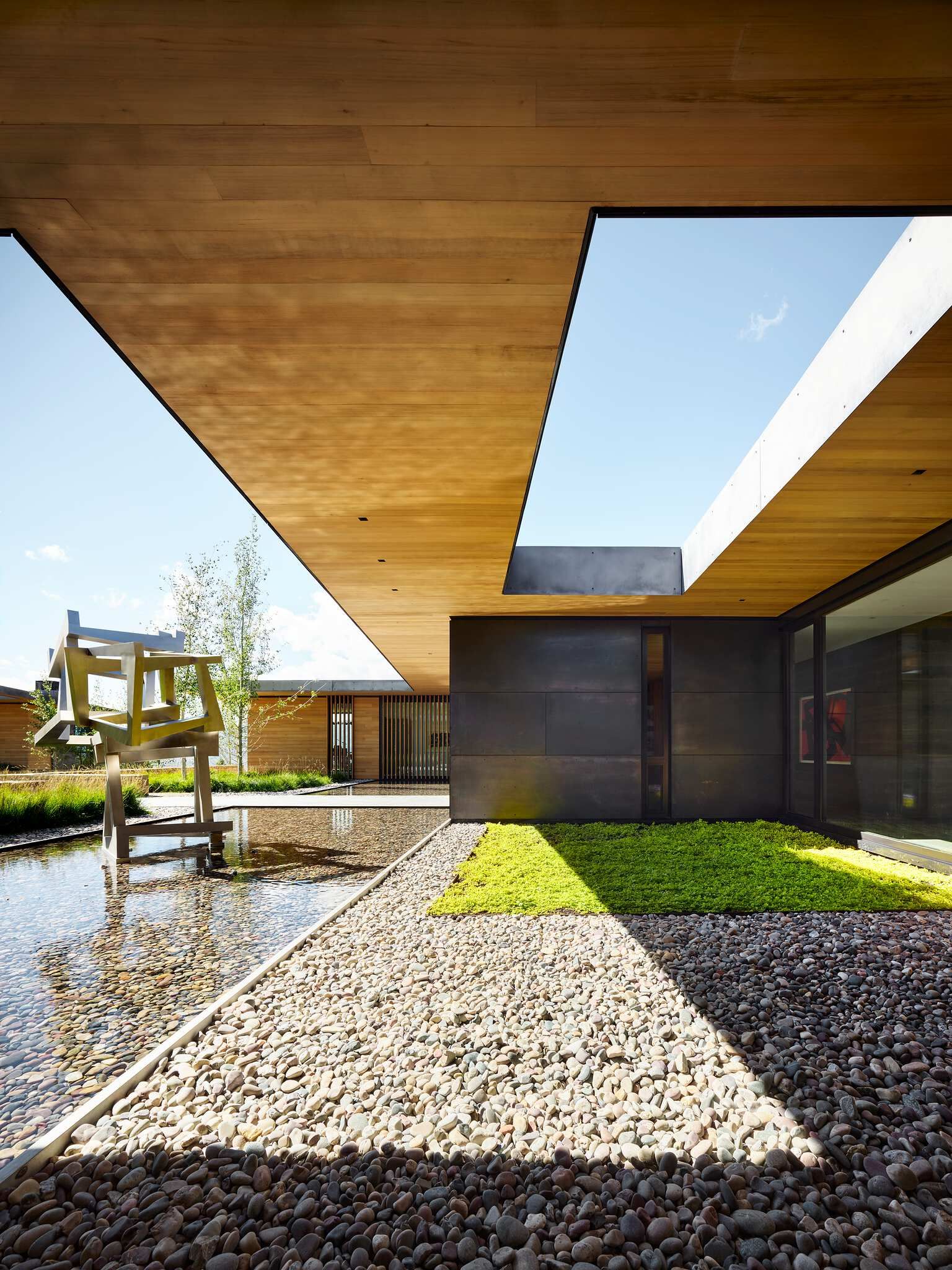
The low-slung, three-bedroom residence gradually rises from the meadow, capped by a compact second story containing the primary bedroom suite and an office suite with access to a rooftop deck. The home’s L-shaped plan separates the main living spaces—living, dining, kitchen, den, and primary bedroom—from secondary areas including guest quarters, gym, sauna, and laundry room. The long, low slope of the roof is structured with a cross-laminated timber (CLT) roof system. The deep overhang creates cover for an outdoor dining terrace that frames Teton Mountain views to the west and the Gros Ventre Range to the east. Deliberately composed exterior spaces wrap the perimeter of the building, allowing access to the panoramic views and one’s preference for sun or shade throughout the day.
Past, Present, and Future
The design and planning draw from the site’s history as a working cattle ranch and the clients’ appreciation of horses, wildlife, and conservation. Game trails crisscross the 35-acre ranch and are seasonally frequented by 400+ head of elk, so the planning was sensitive to these migrational patterns. Besides bringing the land back to its roots as a working ranch, the design helps restore the land with the addition of topsoil and native seeding. A newly planted bosque of aspen trees introduces shade and establishes a sense of placemaking.


Elemental Materials
House and barn are defined by elemental forms and materials that nod to the site’s past. A material palette of dark-stained cedar, steel, and board-formed concrete defines the exterior of the buildings. Inside, white oak, polished concrete floors, and custom steel and walnut millwork establish a grounded, earthy sense of warmth.

Project Leads
Contact Us

Explore More Work
View All
Caju
Teton Village, Wyoming

ShineMaker
Wilson, Wyoming

EMIT
Sheridan, Wyoming

Elysium Fields
Jackson, Wyoming